

- Introduction
- Precision Crop Management: The Iowa Case Study
- Water Conservation: Fighting Drought with Data
- Pest Management: The Rise of Computer Vision
- Micro Farming: AI for the Urban Grower
- The Economic Impact: Reducing Costs, Increasing Profit
- Future Trends: What Lies Beyond 2025?
- FAQ: Common Questions About AI Green Sustainable Farming
Introduction: The Data-Driven Revolution on American Soilon
IIn 2025, the agricultural landscape of the United States is undergoing a profound transformation. We are no longer talking about the “potential” of technology; we are witnessing the measurable impact of AI Green Sustainable Farming USA 2025. As the global population climbs and climate patterns become increasingly erratic, the intersection of Artificial Intelligence and eco-friendly agriculture has moved from a luxury to a necessity.
Thank you for reading this post, don't forget to subscribe!For eco-conscious Americans and farmers alike, the stakes have never been higher. The pressure to produce more food with fewer resources is driving a massive shift in how we manage our land. The old methods of “spray and pray”—blanketing fields with water and chemicals—are being replaced by surgical precision powered by algorithms.
This report dives deep into the specific mechanics of this green revolution. We aren’t just looking at theories; we are looking at hard data from the cornfields of Iowa to the drought-prone valleys of California. As search interest for “AI sustainable farming USA 2025” spikes, it is clear that the public and the industry are ready to embrace a smarter, cleaner future. Whether you are a large-scale producer or interested in micro farming, understanding these shifts is vital for the year ahead.

Precision Crop Management: The Iowa Case Study
The End of Guesswork
The cornerstone of AI Green Sustainable Farming USA 2025 is the elimination of guesswork in crop management. Historically, farming relied heavily on intuition and historical averages. Today, it relies on real-time data.
In the American Midwest, specifically in states like Iowa, this technology is already yielding massive returns. By utilizing AI to analyze soil composition, moisture levels, and hyper-local weather patterns, farmers are seeing unprecedented results.
The 18% Yield Boost
Recent data indicates that AI-driven insights have boosted corn yields in Iowa by an impressive 18% in 2025. How is this achieved? It starts with the machinery. Companies like John Deere have rolled out tractors equipped with advanced sensors and AI processors that “read” the ground as they drive over it.
These smart machines perform Variable Rate Technology (VRT) tasks. As the tractor moves across a field, it doesn’t just plant seeds at a constant rate. It adjusts the seed spacing and depth tailored to the soil health of that specific square meter.
- Soil Health Analysis: Sensors detect nutrient deficiencies instantly.
- Seed Placement: AI calculates the optimal density for maximum growth.
- Fertilization: Chemicals are applied only where needed, drastically reducing runoff.
This precision supports the USA’s aggressive goal to increase local food production by 20% in 2025. By maximizing the output of every acre, we reduce the need to deforest new land for agriculture, solidifying the environmental ethics of the AI green revolution

Water Conservation: Fighting Drought with Data
The California Crisis and the AI Solution
Water scarcity is perhaps the single greatest threat to sustainable farming in the western United States. In drought-prone areas like California, traditional irrigation methods are no longer sustainable. This is where AI Green Sustainable Farming USA 2025 makes its most critical environmental contribution.
The integration of AI into drip irrigation systems has fundamentally changed water usage. These are not simple timers; they are dynamic systems that “think.”
- Real-Time Adaptation: These systems utilize real-time weather data to adjust water flow. If a rainstorm is predicted in 4 hours, the irrigation system pauses. If a heatwave is detected, it micro-doses water to the roots to prevent evaporation.
- The 20% Savings Benchmark: The results are quantifiable. AI drip irrigation systems in California are currently saving 20% more water compared to traditional methods.
Preserving Resources for Future Generations
Saving 20% of agricultural water usage in a state like California is not just a cost-saving measure; it is a survival strategy. These technologies ensure that crops receive exactly the amount of hydration they need—not a drop more, not a drop less. This aligns perfectly with the USA’s national water conservation targets and serves as a model for other arid regions globally.. Do Follow : Details at nifa.usda.gov.
Pest Management: The Rise of Computer Vision
Reducing the Chemical Load
One of the most controversial aspects of modern farming is the use of pesticides. While necessary for protecting yields, indiscriminate spraying harms the environment, soil health, and beneficial insects. AI Green Sustainable Farming USA 2025 introduces a “sniper” approach to replace the “shotgun” approach.
In 2025, we are seeing the widespread adoption of AI-powered drones in states like Texas. These drones fly autonomously over vast fields, using high-resolution cameras and computer vision to scan vegetation.
The “Spot-Spray” Revolution
The AI on board these drones can distinguish between a healthy crop, a weed, and a pest infestation.
- Identification: The drone identifies a “hotspot” of pests in a specific corner of a field.
- Targeting: Instead of spraying the whole field, the farmer can target treatment precisely to that hotspot.
- Result: This method has reduced pesticide use by 25% in Texas farms in 2025.
This reduction is a massive win for the ecosystem. By lowering the chemical load, we protect local waterways from runoff and, crucially, protect beneficial insects like bees, which are essential for pollination. Do Follow : AI Green Tech USA 2025.
Micro Farming: AI for the Urban Grower
Bringing Sustainability to the City
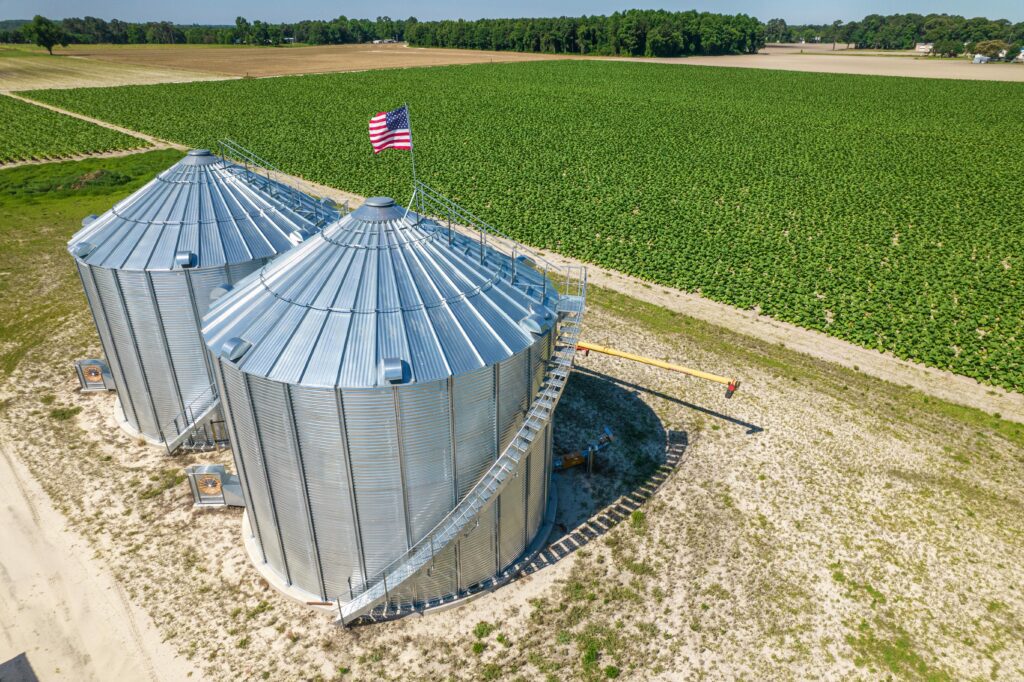
While massive grain silos and thousand-acre fields dominate the conversation, a secondary revolution is happening in the form of Micro farming. This is a critical component of the 2025 sustainable landscape.
Micro farming involves small-scale, high-yield agriculture, often in urban or suburban settings. AI is the secret weapon making this economically viable.
- Vertical Farming optimization: AI algorithms manage light spectrums, humidity, and nutrient delivery in indoor vertical farms, allowing food to be grown year-round in cities like New York and Chicago.
- Small-Scale Robotics: Smaller, cheaper versions of the massive John Deere tractors are being developed for plots under 5 acres. These robots can weed and plant autonomously, allowing micro-farmers to manage more land without hiring expensive labor.
By decentralizing the food supply, micro farming reduces the carbon footprint associated with transporting food across the country.

The Economic Impact: Reducing Costs, Increasing Profit
The Kansas Efficiency Model
Sustainability must be economically viable to survive. Critics often claim that “going green” is expensive, but AI Green Sustainable Farming USA 2025 proves the opposite.
In Kansas, farmers are utilizing predictive AI to optimize labor and logistics. AI models analyze crop maturity rates to predict harvest times with pinpoint accuracy. This allows farmers to schedule labor crews and machinery exactly when needed, eliminating idle time.
- The Result: Farmers in Kansas have reported optimizing labor and cutting operational costs by 15%.
- Productivity Spikes: Across the Midwest, the combination of VRT, automated irrigation, and labor optimization has led some farms to report a 25% overall increase in productivity.
This economic resilience allows farmers to reinvest in their land, creating a positive feedback loop of sustainability and profitability.
Future Trends: What Lies Beyond 2025?
While we are currently witnessing a revolution, the technology is still evolving. The “Future Trends” for AI Green Sustainable Farming USA 2025 suggest that we are only scratching the surface.
Autonomous Swarms
The singular, massive tractor may soon be replaced by “swarms” of smaller, autonomous robots. These small bots cause less soil compaction (which is better for soil health) and can work 24/7 without human intervention.
AI-Driven Supply Chains
AI will soon extend beyond the farm gate. Predictive algorithms will link farmers directly to retailers and consumers, predicting demand spikes to reduce food waste in the supply chain. If the AI predicts a high yield of strawberries, it can alert retailers weeks in advance to run promotions, ensuring the food is eaten rather than thrown away.
Gene Editing and AI
The next frontier involves AI analyzing plant genetics to develop crops that are naturally resistant to climate change. By simulating millions of genetic combinations, AI can help scientists breed drought-resistant corn or heat-tolerant wheat in a fraction of the time traditional breeding takes.
FAQ: Common Questions About AI Green Sustainable Farming
Q: How does AI specifically help with organic farming? A: AI is a game-changer for organic farmers who cannot use synthetic pesticides. AI-powered mechanical weeders can identify and pull weeds physically using robotics, eliminating the need for chemicals entirely while reducing the manual labor usually required for organic farming.
Q: Is AI farming technology only for large corporations? A: No. While large companies like John Deere lead the way, the cost of sensors and software is dropping. Micro farming technologies and mobile apps allow small family farms to utilize soil analysis and weather prediction tools for a low monthly subscription.
Q: Does AI reduce the nutritional value of food? A: On the contrary. By ensuring plants receive the exact balance of nutrients and water they need, AI-grown crops often have better nutritional profiles and fewer chemical residues compared to traditionally farmed crops.
Q: How does this help with Climate Change? A: Agriculture is a major producer of greenhouse gases. By increasing efficiency, we reduce fuel consumption (fewer tractor passes), reduce nitrogen usage (less fertilizer runoff), and sequester more carbon in healthy soil. The 20% water savings in California is a direct climate adaptation strategy.
Conclusion: Championing a Greener Tomorrow
The narrative of American agriculture is being rewritten by code and sensors. AI Green Sustainable Farming USA 2025 is not just a buzzword; it is a sophisticated system that transforms crop management, maximizes water efficiency, and introduces innovations that boost the USA’s food security.
For the eco-conscious reader, this is a time of hope. The adoption of these technologies means that the food on your table is becoming more sustainable, less chemical-reliant, and more resilient to a changing climate. By leveraging AI, American farmers are producing more with fewer resources, paving the way for a resilient future.
As we move through 2025, the collaboration between technology and nature will only deepen. Let’s champion this green revolution together and build a sustainable tomorrow.
Ready to learn more? Follow AI Green USA for daily updates on the intersection of technology and ecology. Check out our upcoming deep dive into Electric Vehicles in Agriculture to see how AI is greening transportation on the farm
Comments are closed.